The COVID-19 pandemic hit the retail world hard, with lockdowns and a big move to online shopping. But as things got better, physical stores started to come back.
Since 2021, physical retail has made a big comeback. This has sparked a lot of talk about the future of brick-and-mortar stores. They are a big part of the retail real estate world.
This article looks at if physical retail will come back after COVID-19. We’ll check out the current state of the retail property market. And we’ll talk about the challenges physical stores still face.
Key Takeaways
- The retail industry faced significant challenges during the COVID-19 pandemic.
- Physical retail has shown a strong recovery since 2021.
- The future of brick-and-mortar stores is a topic of ongoing debate.
- The retail real estate landscape is evolving.
- Challenges remain for physical stores to regain their pre-pandemic stature.
The Current State of the Retail Property Market
The COVID-19 pandemic has changed the retail property market a lot. Retailers now have to adjust to how people shop differently. With fewer people going to stores, sales have dropped a lot.
Many stores have started new ways to sell, like letting customers pick up online orders in-store. They also offer curbside pickup.
The pandemic has hit retail spaces hard. Many stores had to close or cut back a lot. People are shopping more online, which has changed how stores work.
Because of this, the demand for certain types of retail spaces has changed. Some properties are being used in new ways. This includes adding technology and creative uses of space to make shopping better.
The retail property market is facing both challenges and chances. While some stores are struggling, others are finding new ways to succeed. The market for retail properties, including homes and commercial listings, is always changing as the retail world adjusts to life after the pandemic.
Success Stories of Retail Revivals
The retail world is seeing a comeback, with big names finding new ways to win back shoppers. They’ve started using new tactics to draw people into their stores. Things like better in-store experiences and selling online and in stores at the same time are key.
Local shops are also making a big impact. They offer personal services and make their stores welcoming. Some have even added cafes or event spaces, making them great spots for people looking for apartments.
These successes come from retailers being able to change with what shoppers want. By improving their stores and offering unique experiences, they can pull in customers looking for more than just a sale. This shift is also boosting demand for land to build new retail spaces that meet today’s shopper needs.
In short, the stories of retail success show that with the right approach, physical stores can do well today. By focusing on the customer and keeping up with the changing retail scene, stores can keep bringing in customers and sales.
Challenges Still Facing Brick-and-Mortar Stores
Brick-and-mortar stores are facing many challenges as they try to stay relevant. One big issue is following health and safety rules, which keep changing because of the pandemic.
These rules mean stores have to do things like keep people apart, clean more, and control crowds. While these steps are crucial for safety, they also make things harder and more expensive for stores.
Stores also have to deal with tough competition from online shops. Online shopping is easy and flexible, changing how people shop. So, physical stores need to find new ways to be appealing.
Today’s shoppers want to buy things that are good for the planet and enjoy unique shopping experiences. Stores must make their in-store visits special and focus on being eco-friendly to keep customers coming back.
The idea of houses and rental properties is also changing retail. We’re seeing more places that mix homes, shops, and fun activities. This could be a chance for stores to connect with customers in new ways.
To stay ahead, stores need to be quick to adapt and meet these challenges. By using technology, improving customer experiences, and being green, stores can succeed in today’s fast-paced market.
The Importance of Experience in Physical Retail
Creating memorable experiences is key for brick-and-mortar stores to keep customers coming back. In today’s competitive world, having a physical store isn’t enough. Stores must offer more than just products.
Excellent customer service is also crucial. It makes customers feel welcome and valued. This can be done through knowledgeable staff, interactive displays, and community events.
For those who own commercial property or run stores, understanding the importance of experience is vital. By focusing on services, ambiance, and products, stores can attract and keep customers. This makes visiting the store a worthwhile experience.
The success of physical retail lies in its ability to adapt and offer unique experiences. These experiences must resonate with customers and stand out from online shopping.
Technological Advances Shaping Retail Properties
Technology is making shopping better and stores more efficient. As retail changes, tech innovations are key to its future.
Omnichannel strategies are a big deal. They let shoppers move easily between online and in-store. For example, you can check out products online, try them in a store, and buy them online or on a mobile app. This smooth experience comes from tech like inventory systems and data analysis.
Augmented reality (AR) is also changing shopping. AR lets customers interact with products in new ways. For instance, some stores use AR to show how furniture looks in your home before you buy it. This makes shopping better and cuts down on returns.
Data analytics are also changing retail. By studying customer data, stores learn what shoppers like. This helps them arrange stores better, manage stock, and target ads. Stores get more efficient and sell more.
In short, tech is greatly changing retail properties. Omnichannel, AR, and data analytics are just a few ways tech is improving shopping. As retail keeps evolving, we’ll see even more tech innovations, like better listings and investments.
Trends Impacting Retail Property Investments
New trends like mixed-use developments and pop-up shops are changing retail property investments. Mixed-use projects mix retail, homes, and offices. They aim to create lively, walkable areas with many amenities.
These developments offer apartments and houses for different people. They make living better and public spaces more lively.
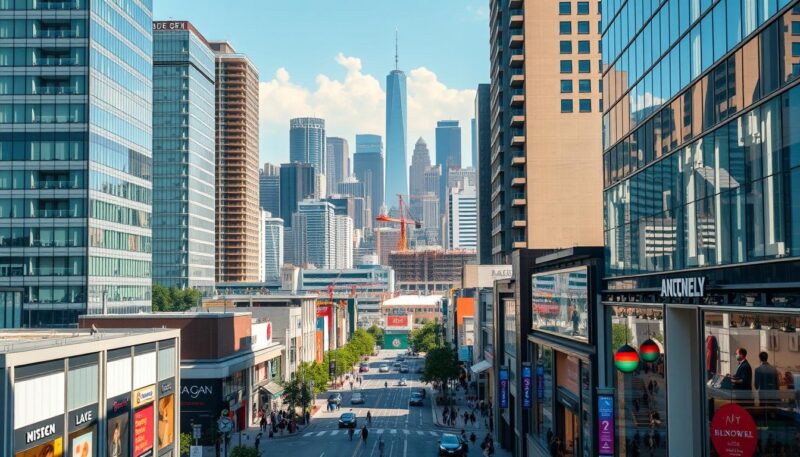
Pop-up shops are also changing retail. They let businesses test markets or products without big risks. They work well in places with lots of people, like malls or busy streets.
The growth of mixed-use and pop-up shops shows a big change in retail. As what people want changes, investors must keep up. This might mean using new tech, like digital signs or interactive retail, in their properties.
By going with these trends, investors can make their properties more valuable and appealing. They can do this by building new mixed-use projects or adding pop-up shops to their properties. There are many ways to make retail properties more attractive.
Sustainability in Retail Property
Sustainability is becoming more important in the retail property world. This is because of what consumers want and the need to protect the environment. Retailers are now focusing on making their property investments more eco-friendly. This shows a bigger trend towards caring for the planet.
Using eco-friendly store designs is a big trend in retail property. Stores are now using sustainable materials and practices. This is to lessen their environmental impact and attract eco-conscious shoppers. For example, they might use recycled materials and energy-saving lights.
Efforts to save energy are also on the rise. This includes using solar panels and energy-efficient HVAC systems. These steps help cut down on carbon emissions and save money for retailers in the long run.
The push for sustainability is also changing how new retail properties are built. Developers are now thinking more about a project’s long-term environmental impact. They look at the environmental effects from start to finish.
In summary, sustainability is key in the retail property world. As shoppers want greener retail experiences, businesses and developers must adapt. This change will likely lead to more eco-friendly and innovative commercial properties.
Urban vs. Suburban Retail Developments
Urban and suburban retail spots offer different chances and hurdles in the real estate world. The choice between them depends on many things. These include who you want to sell to, your brand’s image, and how people shop.
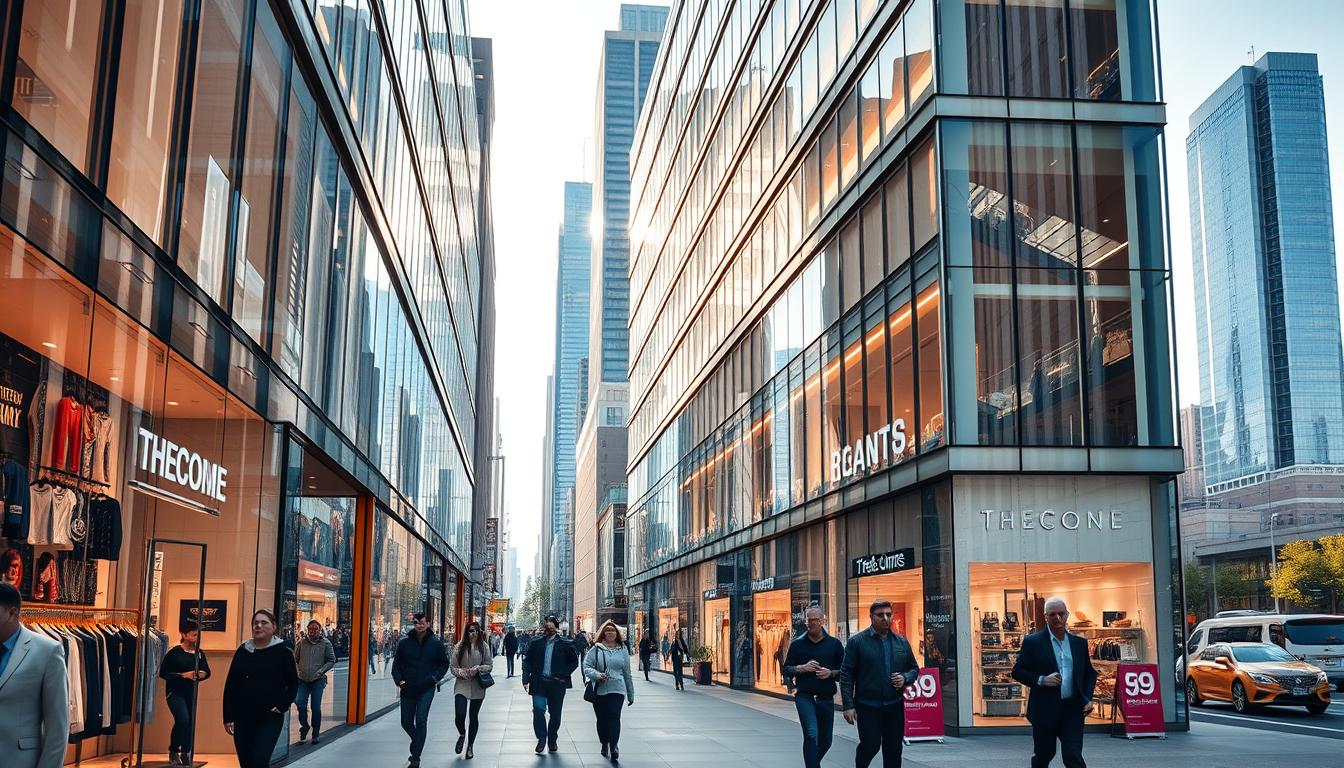
Urban retail areas have lots of people walking by and easy access to public transport. They’re perfect for brands that love being seen and drawing in a wide range of customers. But, they can be pricey and very competitive.
Suburban retail spots, on the other hand, offer a calm shopping vibe and plenty of parking. They’re great for families and people who enjoy shopping at their own pace. Suburban places usually cost less to rent than city areas. Yet, they might need more marketing to draw in shoppers.
When picking between urban and suburban retail, it’s important to think about your business goals and who you want to sell to. Knowing the good and bad of each place is key to making smart choices in real estate.
The future of retail will likely blend urban and suburban approaches. This will depend on what shoppers want and need. As retail keeps changing, being flexible and ready to adapt will be crucial for success in the rental market.
The Future of Shopping Malls
The future of shopping malls is about offering more than just shopping. As people’s tastes change, malls are being updated to stay interesting.
Mixed-use developments are a big trend. These malls are now places to live, work, and play. They aim to be lively spots that draw in more people.
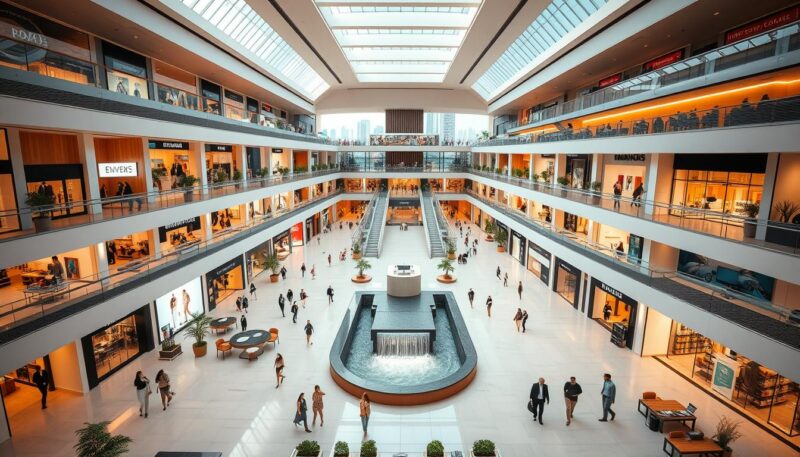
Malls are adding homes, offices, and fun spots. For example, they might have apartments, workspaces, movies, and food. This makes them a go-to place for everyone.
Modern malls are becoming community centers. They host events like festivals, art shows, and fitness classes. These activities bring people together, making malls welcoming places.
Adapting to new tech and tastes is key for malls. They’re using apps for better shopping experiences. This makes visiting the mall easier and more fun.
In short, malls are evolving to stay relevant. By offering more, embracing new uses, and using tech, they can remain vibrant spots for everyone.
Local Shops vs. Big Brands
The retail world is seeing a cool battle between local shops and big brands. Local stores are doing great, offering special items and personal service. They really get to know their community.
Big brands, on the other hand, are trying to keep up by improving their shopping experience. They’re using online and offline channels to meet customer needs. This way, they can stay ahead in a market where shoppers want a smooth experience everywhere.
It’s not always a competition between local shops and big brands. Sometimes, big brands help local stores by bringing more people to the area. At the same time, local shops make shopping districts more interesting. They offer something unique that big brands can’t.
The demand for retail space is shaped by both local shops and big brands. Smart investors and developers see the value in creating lively, diverse shopping areas. These areas meet different customer needs.
The connection between local shops and big brands is complex. By understanding each side’s strengths and weaknesses, everyone can help make retail spaces better. This benefits both local communities and the wider commercial property market.
Predictions for the Future of Retail Property
The retail property world is set for big changes. Trends in the industry are moving fast. Experts say e-commerce will keep growing, changing how we use physical stores.
Stores will need to be flexible and green to stay in business. This change will affect many areas, like apartments and rentals. They will need to meet new consumer demands.
Sustainability will play a big role in retail property. As things change, investors and developers must keep up. They need to find new chances in the real estate market.