Singapore is a top choice for real estate investment. It’s known for its modern buildings, diverse culture, and strong economy. But, for expats, the property market can be tricky to navigate. This guide aims to make it easier, explaining how the market works and what foreign buyers need to know.
Key Takeaways:
- Singapore offers a stable and thriving property market, attracting expats and investors worldwide.
- Expats can purchase a range of property types, including condos, landed homes, and even HDB flats, with specific requirements and restrictions.
- Permanent Residents (PRs) enjoy more flexibility and benefits when buying property compared to non-PR expats.
- Financing options, including bank loans and use of CPF savings, are available for expats, but with varying terms and conditions.
- Understanding the buying process, popular investment areas, and tax implications is crucial for successful property investment in Singapore.
Understanding Singapore Property Market for Foreigners
The Singapore property market is full of chances for foreign investors. Rental yields here range from 2.5% to 3.5% each year. The Central Business District (CBD) and Marina Bay have higher yields because of the demand from expats and professionals.
Property prices vary a lot based on where you are. Prime spots like Orchard Road and Marina Bay can cost up to SGD 25,000 per square meter. But, suburban areas are more affordable, around SGD 12,000 per square meter.
In the last decade, property values in Singapore have grown steadily. They’ve averaged 3-5% growth each year. Some areas, especially in high-demand spots, have seen even faster growth. This steady increase has made the Singapore Property Market a popular choice for investors.
Singapore’s location, infrastructure, and business environment make its rental market thrive. Foreigners are attracted to its stability, efficiency, and high quality of life. This drives strong demand for rental properties, especially in prime areas.
Property prices in Singapore have seen some ups and downs. But overall, they’ve kept going up. The government’s efforts to keep housing affordable for locals have helped balance the market.
Buying Property in Singapore as a Non-Resident
The Singapore property market is a great place for foreigners to invest. It offers a stable and lively real estate scene. But, there are rules about owning land.
Foreigners can buy condominiums or apartments in private developments without needing approval. But, buying landed properties like bungalows or terrace houses is different. They need special approval from the Singapore Land Authority.
Getting approval to own property as a non-resident is not easy. You must show you’ll help the country’s economy, science, or technology. Foreigners can only own landed homes in Sentosa, a resort island off Singapore’s coast.
When buying homes in Singapore, foreigners must pay a Buyer’s Stamp Duty (BSD) and an Additional Buyer’s Stamp Duty (ABSD) of 20%. But, some countries like the United States are exempt from the ABSD.
Buying property in Singapore as a non-resident can be done with the right help. Knowing the rules and working with experts can open up many options. This way, non-residents can find the perfect home in this vibrant city-state.
Investment Returns and Property Value Growth
Investing in Singapore property can offer good returns. Properties near MRT stations and schools grow more in value. Over 10 years, property values have risen by 3-5% yearly, with some areas seeing more growth.
In 2024, property prices are expected to increase by 3% to 6%. Rental yields vary by area. The Core Central Region offers a 3% yield, while the Outside Central Region can offer 4% or more.
Smaller apartments have higher returns, around 4.1% gross rental yield. Larger units have lower returns, about 2.5%. Investing in Singapore real estate protects against inflation and grows wealth over time.
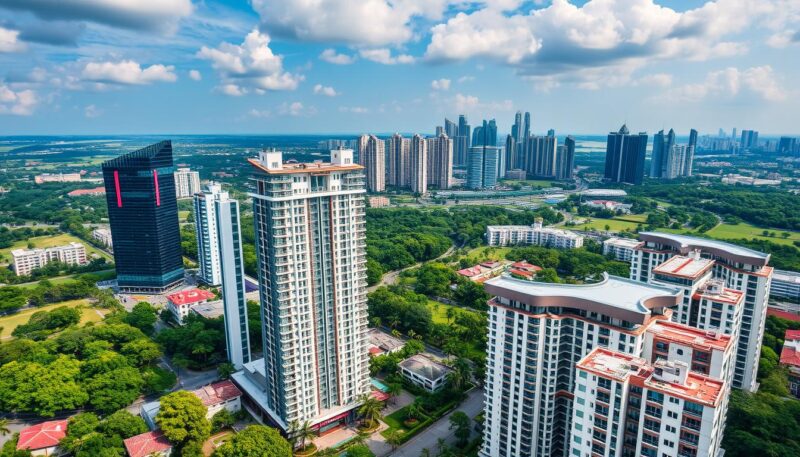
Areas like Jurong, Punggol, and Sengkang have seen big value increases. This is thanks to government infrastructure projects. The Total Debt Servicing Ratio (TDSR) framework also affects loan eligibility for property purchases in Singapore.
Singapore Property as a Foreigner: What You Can Buy
Foreigners have many options when buying residential properties in Singapore. You can easily buy condominium units or apartments in private developments. But, buying landed properties like bungalows or terrace houses is more complicated.
For landed properties, you need special approval from the Singapore Land Authority. This approval is not given easily. It usually requires the foreign buyer to contribute to Singapore’s economic, scientific, or technological growth. The Global Investor Programme (GIP) is one way for foreigners to buy landed properties in places like Sentosa Cove.
The Singapore property market is still very appealing to foreign investors. It has a strong economy, stable politics, and steady property value growth. This makes Residential Properties Singapore for Foreigners a good investment. Landed Properties Singapore for Foreigners, especially in areas like Bukit Timah and Holland Road, have seen big price increases.
Whether you want to invest in a condominium or a landed property, Singapore has many opportunities. With the right advice and understanding of the market, you can find the perfect property. This will help you meet your investment goals.
Singapore Property for Permanent Residents (PRs)
Expats who become Singapore Permanent Residents (PRs) can buy certain properties. These include resale HDB flats, Executive Condominiums (ECs) after a Minimum Occupation Period (MOP), private condos, and strata-landed properties. But, they must meet specific requirements, like a waiting period for HDB flats and income limits for ECs.
Singapore PRs can buy private condos, strata-landed houses in approved developments, and leasehold estates in landed properties with approval. But, they can’t buy terrace homes, semi-detached houses, bungalows, vacant land, or specific commercial premises. Only Singapore citizens, companies, societies, and limited liability partnerships can buy landed housing without government approval.
HDB flats and Executive Condominiums (ECs) are available for Singapore PRs, but with limits. Single PRs can’t buy Build-to-Order (BTO) or Sale of Balance Flats (SBF) from HDB; they need to be married to a Singapore citizen first. Also, Singapore PRs buying a resale HDB flat must meet the Ethnic Integration Policy (EIP) and Singapore Permanent Resident (SPR) quotas related to race and ethnic groups.
While Singapore PRs have more options than foreigners, they still face restrictions and requirements for property ownership. It’s important for PRs to understand these guidelines when investing in the local real estate market.
Financing Options for Expats Buying Singapore Property
Expats wanting to buy property in Singapore have many financing options. Mortgages for foreigners are available, but they might have stricter rules than for locals. This includes higher loan-to-value ratios and more cash needed upfront.
For a first home, the LTV ratio is 75%, and you need at least 5% cash down. For second homes, these numbers can be even higher. It’s important to compare the loan terms and interest rates offered by different banks.
Expats can also look into home equity loans, personal loans, and fixed or floating-rate mortgages. Singapore’s rules on Total Debt Servicing Ratio (TDSR) and Mortgage Servicing Ratio (MSR) apply to all buyers. These rules help limit how much debt you can take on.
When financing a property in Singapore, remember to budget for extra costs. These include stamp duties, legal fees, and agent commissions. Knowing the financing landscape and getting advice from local experts can help expats confidently invest in Singapore property.
Singapore Property Investment: Buying Process for Foreigners
Buying property in Singapore as a foreigner can be rewarding. But, it’s key to know the steps involved. The process includes getting financing, finding a property, making an offer, and more.
Foreigners should also think about the Additional Buyer’s Stamp Duty (ABSD). It’s 30% of the purchase price. Other fees and charges can also affect the cost.
Despite these challenges, Singapore is still a great place for property investment. Foreigners get the same rights as locals when buying condos. Plus, property values have grown steadily, averaging 3-5% yearly.
To buy property in Singapore as a foreigner, work with experienced pros. Real estate agents and lawyers can help you follow the rules. With the right preparation, foreigners can invest successfully in Singapore’s property market.
Popular Property Investment Areas for Expats
Singapore is a global hub that attracts thousands of expatriates seeking lucrative investment opportunities. Several areas in Singapore have become popular among foreign buyers. The Central Business District (CBD), Marina Bay, and Orchard Road are top choices, offering luxury condos and high-end apartments.
The CBD is known for its striking skyscrapers and business hubs. Marina Bay offers scenic waterfront views and easy access to amenities. Orchard Road, the iconic shopping district, also attracts foreign buyers with its vibrant and well-connected neighborhood.
Cairnhill is known for its exclusive charm and natural beauty. The East Coast offers a relaxed, coastal lifestyle with easy access to the city center. These areas provide a diverse range of luxury condos for Expats, catering to different preferences and lifestyle needs.
Factors like proximity to business hubs, access to amenities, and scenic views make these areas attractive for Expat property investment in Singapore. As the city-state evolves, these popular investment areas will likely remain appealing. They offer Expats a solid foundation for their real estate portfolio.
Tax Implications for Foreign Property Buyers
When buying property in Singapore, foreign buyers face several tax considerations. The Additional Buyer’s Stamp Duty (ABSD) is a big factor. Foreigners pay a 30% ABSD rate, much higher than locals.
Foreign buyers also have to pay Stamp Duty for Foreign Buyers in Singapore. Other costs include Mortgage Duty and legal/administrative fees. These costs can quickly add up, so it’s crucial to include them in your budget early on.
Income from overseas is usually not taxed in Singapore, except in certain cases. Double taxation agreements can affect tax implications. It’s important to report all taxable overseas income correctly.
Property tax is paid yearly in advance. When selling a property, the seller might need to give back some tax to the buyer. Sellers should also know about Seller’s Stamp Duty (SSD) if they sell within 4 years. But, selling property in Singapore usually doesn’t result in taxable gains.
Using a Buyer’s Agent for Singapore Property Purchase
Foreigners buying property in Singapore often find it helpful to use a buyer’s agent. A Buyer’s Agent helps navigate the complex Singapore real estate market. They offer many benefits that make buying property easier and more successful.
Benefits of Using a Buyer’s Agent for Foreigners in Singapore include access to exclusive listings and expert negotiation skills. They also provide deep market insights. This helps buyers understand property values, spot potential issues, and get the best deal.
For Expat Property Buyer’s Agents in Singapore, the fee is about 1% of the purchase price. This fee is worth it for those new to the local market. Agents know the area well, including neighborhoods, schools, and investment potential. They help buyers make informed decisions, saving time and money.