Buying a home in Singapore is a big financial step. Picking the right mortgage loan is key for a smooth purchase. This guide will help you understand what to look for in a mortgage loan for your Singapore property.
We’ll cover how to assess your financial situation and compare different loan types. By the end, you’ll know how to choose the best mortgage loan for your needs and future financial goals.
Key Takeaways
- Understand your financial capabilities and the factors that influence your loan options, such as the Total Debt Servicing Ratio (TDSR) and Mortgage Servicing Ratio (MSR).
- Explore the differences between HDB loans and bank loans, and how they impact interest rates and down payment requirements.
- Evaluate fixed-rate and floating-rate mortgages, considering the stability of fixed rates versus the potential cost savings of floating rates.
- Analyze the impact of loan tenure on your monthly repayments and total interest payable, balancing financial flexibility and long-term affordability.
- Stay informed about market trends, including the phasing out of SIBOR in favor of SORA, to make the most suitable mortgage loan decision.
Understanding Your Financial Situation
Choosing the right Singapore property loan starts with knowing your finances. You need to figure out how much you can borrow and if you can afford the monthly payments. You also have to think about the Total Debt Servicing Ratio (TDSR) and Mortgage Servicing Ratio (MSR).
The TDSR in Singapore limits how much you can borrow based on your debts. Lenders check your TDSR to make sure you can handle your loan payments. The MSR, on the other hand, ensures your monthly payments don’t exceed 30% of your income.
Knowing your financial health helps you find the best loan. You should look at your assets, debts, income, and budget for extra costs. This includes stamp duties, legal fees, and renovation costs.
Tools like the DBS MyHome Planning tool can help. They show how much you can afford, including the loan amount, monthly payments, and the type of property. Taking the time to understand your finances is key to getting the right mortgage loan in Singapore.
Comparing Loan Types
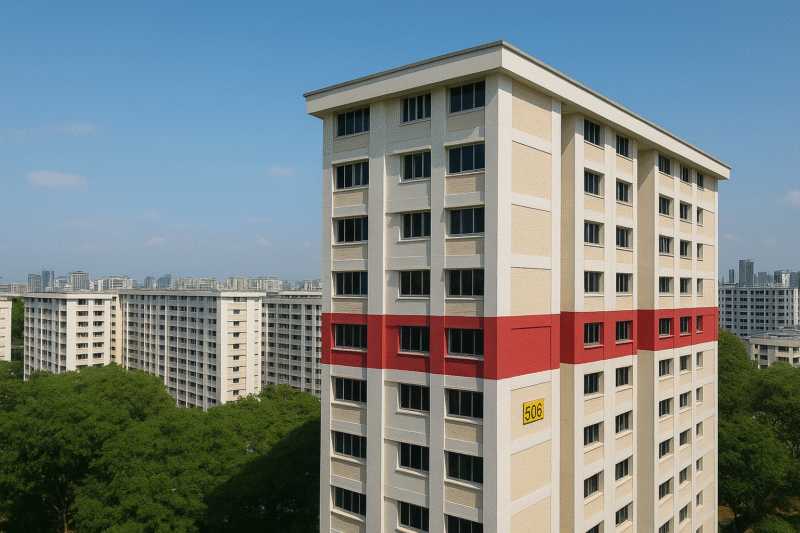
When financing your Singapore property, you can choose between an HDB loan and a bank loan. HDB loans are for public housing, while bank loans are for private properties. Each has its own pros and cons, like downpayment, interest rates, and loan length.
HDB loan interest rates are fixed at 2.6%. Bank loans have varying rates, with fixed rates often higher than floating rates. The interest difference for a $1,000,000 loan can be about 3.9% annually.
For HDB properties, the top fixed-rate home loans are from DBS, OCBC, Maybank, Standard Chartered Bank, and CITI. But, fixed-rate loans are less common now because of higher interest rates.
In Singapore mortgage options, board-rate home loans from DBS and HLF are great for HDB buyers. Floating-rate home loans now use SORA as the benchmark rate, replacing SIBOR and SOR.

Choosing the right loan for your Singapore property depends on your finances, property needs, and the changing home financing alternatives. Getting professional advice can help you save money and make the best choice.
Selecting the Right Loan Tenure
When you get a mortgage loan in Singapore, the loan tenure is key. It affects your monthly payments and the total interest you pay. The length of your loan can change how much you pay each month and the total interest over time.
Longer loan terms, up to 35 years for non-HDB properties and 30 years for HDB flats, mean lower monthly payments. But, you’ll pay more in interest over time. Shorter terms help you pay off debt faster but might mean higher monthly payments.
Choosing the right Singapore Mortgage Loan Tenure depends on your finances and goals. The Singapore Home Financing Repayment Period should match your income, expenses, and ability to pay each month. The Singapore Property Loan Term affects your total interest and the cost of buying a property.
By thinking about your finances and finding a balance, you can pick the Singapore Mortgage Loan Tenure that works for you. This choice helps you reach your goal of owning a home in Singapore.
Evaluating Fixed-Rate Home Loans
Fixed-rate home loans are a great choice for homebuyers in Singapore. They offer stability and predictability, with the interest rate staying the same for a set period. This can be very comforting, especially when the economy is uncertain. But, these loans usually have higher interest rates than floating-rate loans.
Understanding the pros and cons of fixed-rate mortgages in Singapore is key. It helps you decide if this option fits your financial situation and risk level. With fixed-rate financing, you get a steady monthly payment. This makes budgeting and planning your finances easier.
Experts say the highest fixed-rate home loan interest rates in Singapore were 4.0% by the end of 2022. But, the most competitive package offered 2.85% interest as of June 2024. This is compared to 3.85% for floating-rate loans. With the Federal Reserve planning to cut rates in 2025, now might be the best time to refinance. This could help you save money right away.
Analyzing Floating-Rate Home Loans
Floating-rate home loans in Singapore are linked to rates like SORA. These rates can change over time. At first, these loans might have lower rates, but they can lead to higher payments if rates go up. Looking at past trends and possible future changes can help you understand the risks and benefits of a floating-rate mortgage.
Recently, fixed mortgage rates in Singapore were about 3%, while floating rates were over 4%. But, the market might change soon. Fixed rates dropped from 4% to 3% at the start of 2024. They could even fall to 2% by 2025, saving you around S$3,500 a year on a S$700,000 mortgage.
Since 2022, SORA has become the key rate for floating home loans in Singapore. It replaced SIBOR and SOR, bringing more stability and clarity to floating-rate financing. Experts think SORA might settle around 3.5% if the US keeps its rates at 4.75%. But, this depends on what happens with US interest rates.
It’s important to keep up with the latest in the Singapore property market. Knowing how floating-rate home loans work can help you choose the best mortgage for you.
Exploring Board Rate Home Loans
Board rate home loans are a floating-rate option for financing your Singapore property. These loans have interest rates set by banks, not tied to benchmark rates like SORA. This can make them attractive, but there’s less transparency since banks can raise rates as they see fit.
It’s key to understand the pros and cons of board rate loans for your Singapore property. Banks can change these rates with just 30 days’ notice. Global interest rate hikes often lead to higher board rates in Singapore. Yet, when rates fall, board rates might not drop as much.
Board rate packages may include lock-in periods. They also let you sell or pay off your property without penalties within a set time. This flexibility is great for those with short-term plans or who can make big repayments.
Choosing between a Singapore Board Rate Mortgage, Singapore Home Loan Board Rates, or other financing options depends on your financial situation and goals. Board rates can be good for some, but it’s vital to weigh the risks and potential rate changes.
Singapore Property Prices and Market Trends
When looking into mortgage loans for your Singapore property, knowing the market trends is key. Property prices are expected to change in the next year. Experts think there will be a slowdown in the Singapore property price index.
Recently, property cooling measures have been put in place. These include higher Additional Buyer Stamp Duty (ABSD) rates. They aim to slow down sales of investment properties, especially in the core central area. Yet, resale HDB properties might see a 2-3% price increase due to limited supply.
In early 2024, expect private property launch prices to hit around $2,050 per square foot. Executive Condominium (EC) prices will likely be between $1,400 and $1,450 per square foot. This shows the ongoing need for affordable housing in Singapore.
Despite construction delays and housing shortages, the Singapore property market is expected to stay strong in 2024. This is thanks to the demand from homebuyers. It’s vital for those looking to buy to keep up with the latest on Singapore Real Estate Prices and Property Investment Outlook. This way, they can make smart choices about their mortgage loans.

Legal and Financial Considerations
When you’re ready to finalize your Singapore property loan, you need to know the legal and financial rules. You must understand the documents needed, legal fees, and any taxes related to buying and financing your property. Knowing these details helps ensure your transaction goes smoothly and you might even save money.
One big plus for property owners in Singapore is getting up to a 100% rebate on property tax for certain properties. The government also gives a 60% rebate on property tax for homes where the owner lives. This can save homeowners a lot of money.
Investors in Singapore can get tax breaks, like exemptions for “Specified Income” on investment funds. But, foreigners buying property in Singapore face rules like ownership limits and specific property types. Also, high costs, like up to 6% in buyer’s stamp duty fees, can affect your investment.
When investing in Singapore real estate, it’s important to think about rental yield and capital appreciation. By understanding the legal and financial aspects, investors can make smart choices. This way, they can take advantage of the benefits while avoiding risks.
Choosing the Right Mortgage Loan Provider
When picking a mortgage loan provider in Singapore, it’s key to look at what different banks offer. You should compare things like interest rates, fees, and customer service. This helps you get the best deal for buying a property.
Singapore has many lenders, from big banks to specialized financial companies. By checking out what Singapore Mortgage Lenders and Singapore Home Loan Banks offer, you can find the right financing for you. Looking at all the options helps you save money in the long run.
Also, think about the total cost of the loan. This includes legal fees, valuation costs, and any penalties for paying off early. By looking closely at each lender’s terms, you can pick the mortgage that fits your financial plans and preferences.