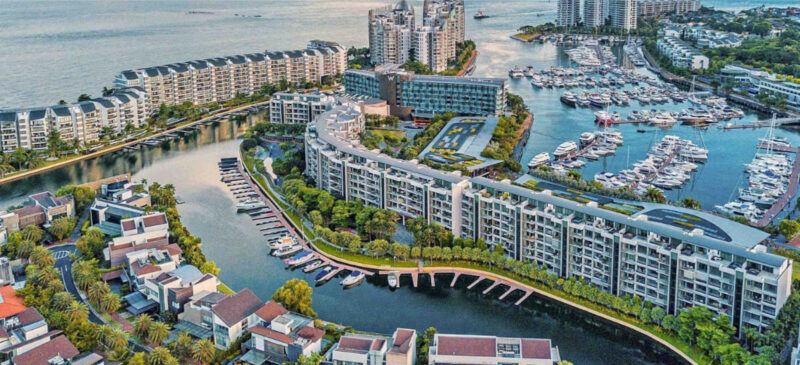

The Singapore property market is changing, making homebuyers and investors wonder if 2024 is the right time to buy. Prices are moving, demand is stabilizing, and new market areas are opening up. Buying a property in Singapore is a big decision that needs careful thought.
Experts say the Singapore residential property scene will see different outcomes in 2024. Prime central areas might see less demand, but the executive condominium (EC) segment could be a highlight. It’s perfect for young, first-time buyers. This is because property prices are rising faster than people’s incomes, making it hard for many to buy without help from their parents.
The Singapore residential property market is starting to stabilize, with prices and demand becoming more stable. But, remember, buying property is a big financial commitment. It’s important to be careful and think long-term before making such a big decision.
Key Takeaways
- The Singapore property market is experiencing divergent price trends, with private properties in prime areas facing tempered demand while the EC segment shows promising growth.
- Younger buyers are increasingly relying on parental support to afford their first homes, as real income growth has not matched the pace of rising property prices.
- The overall residential property market is stabilizing, but buyers must exercise prudence when making long-term financial decisions.
- Interest rates and global economic conditions can significantly impact the Singapore property market, influencing home buying decisions.
- Upcoming property launches and government policies may further shape the market dynamics in 2024.
Divergent Property Price Trends
The Singapore property market has seen different price trends lately. Property prices have risen by 30% in the last five years. But, this growth is not the same for all types of properties.
Recently, private home prices jumped by 3.1% in the first quarter of 2024. This is the biggest increase since 2010. However, HDB resale prices have been falling for six quarters in a row. They dropped by 0.8% in the first quarter of 2024.
This difference in prices makes it hard for Singaporeans to move up to better homes. They might have to take on bigger loans or buy less expensive properties. The government is trying to slow down the market with cooling measures. These include higher taxes on foreign investors in the Property Prices Singapore and Property Investment Singapore markets.
Singapore Property Price Projection for 2024
The Singapore property market is expected to have a mixed outlook in 2024. DBS research suggests that property prices might stabilize. Luxury properties might see less demand from foreign buyers.
However, resale HDBs, suburban condos, and ECs could attract more local buyers. This could lead to stronger demand in these areas.
New private property prices are expected to stay around $2,050 per square foot. EC prices could range from $1,400 to $1,450 per square foot. High land costs, construction expenses, and interest rates are driving these prices up.
Despite this, younger Singaporeans are showing interest in buying property. They are willing to overlook high COV and lease decay issues. This could change the Property Trends Singapore in the coming years.
Younger buyers are also open to older mixed-use projects like People’s Park Complex. This shows a shift towards central locations, even with maintenance issues. This trend might affect prices in prime areas.
New Property Launch Prices and Affordability
The Singapore property market is changing fast. New property launches and how affordable they are are getting more attention. Inflation has risen, and real incomes have dropped by 2.3% in 2023. Yet, home ownership in Singapore is very high, almost 90%.
In the last two years, some trends have stood out. More ‘million-dollar’ resale HDB flats have appeared. Also, Executive Condominiums (ECs) have started at record prices. New private homes in the Outside Central Region (OCR) have hit over $2,000 per square foot, making it hard for many to buy.
Buying a BTO or resale HDB home (4-room) is still within reach for some. But, the downpayment can be a big challenge. Buyers might need to save for 5-7 years at a 50% savings rate to cover the downpayment.
The market is trying to keep home ownership high while making homes affordable. This is especially true for first-time buyers and younger families. Watching Property Listings Singapore, Property Agents Singapore, and Property Affordability Singapore will be important in the future.
Stabilizing Private Residential Sector
The Singapore property market is showing signs of stabilizing in the private residential sector. Prices of private homes rose by 1.4% in the first quarter of 2024. This is a slower growth compared to previous quarters. The trend shows a steady increase in the Property Market Singapore.
In December 2023, new private homes sold hit a 15-year low. Experts say this is due to fewer new projects and the holiday season. Despite this, prices have still gone up, but at a slower pace. Most of the growth is happening in the suburbs.
The stabilization in the private residential sector comes from several factors. The government’s property cooling measures and the economy play a big role. The URA’s private home price index rose by 0.8% in Q3 2023. This is a big improvement from the 0.2% drop in the previous quarter.
This shows the market is getting back on track. The projected full-year increase is in the 4-plus % range. This is a slowdown from the 8.6% growth in 2022 and 10.6% in 2021.
HDB Resale Market and Million-Dollar Flats
The HDB resale market in Singapore has seen some interesting changes. In 2024, resale HDB flat prices went up by 5.8%, but at a slower rate than before. What’s really catching attention is the record number of flats sold for over $1 million, hitting 543 transactions.
This record shows a big demand for homes in good locations. Buyers are paying more to get away from HDB restrictions. The highest price paid was $1.57 million for a five-room flat in Bishan Street 24. Meanwhile, a five-room flat in Punggol Field sold for $1.23 million, the highest in a non-mature estate.
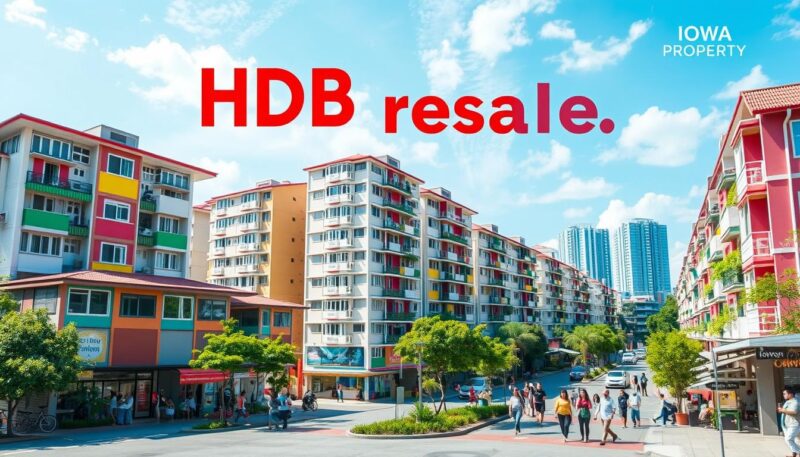
Some areas are seeing a lot more million-dollar flat sales. Kallang Whampoa led with 23 transactions, followed by Bukit Merah with 21, and Queenstown with 18. This shows a strong interest in flats in central locations, seen as a good investment.
The rise of million-dollar flats in the HDB Resale Market is a big topic. It shows how homebuyer preferences and market dynamics are changing in Singapore.
Rental Market Cooling but Above Pre-Pandemic Levels
The Singapore property rental market has seen a slowdown. Savills Singapore data shows rental prices might drop by 5% in 2024. This is because more private homes were completed in 2023 than in the year before.
This increase in homes has led to more empty properties. Vacancy rates have gone up, especially in the Outside Central Region (OCR). Rental homes are now taking longer to find tenants.
Even with the market cooling, prices are still higher than before the pandemic. More foreigners and homeowners are looking for places to rent. This competition has made landlords offer better deals to keep tenants.
Now, renters have more choices and can negotiate better. This makes the market more in favor of tenants.
Tenant preferences are changing too. People want flexible leases, homes that allow pets, and green features. Landlords need to adjust to these changes.
They should focus on setting realistic prices, improving their properties, and marketing well. Keeping tenants happy is key to staying competitive in the Rental Market Singapore.
Economic Factors and Government Policies
Singapore’s property market is shaped by the country’s economy and government policies. In 2024, Singapore’s economy looks strong, with growth between 1% and 3% expected. Unemployment is also expected to stay low, around 2%. This good economic health usually means higher property prices as more people can afford homes.
The government has set policies to balance the property market. They’ve changed property tax bands and given stamp duty breaks for seniors downsizing. These moves help make owning a home easier and keep the market stable. But, the government’s next steps on cooling measures, like ABSD and TDSR, will be key to the market’s future.
Population growth and interest rates also play big roles. As Singapore’s population grows, so does the need for homes, pushing prices up. Lower interest rates make it easier to borrow, encouraging more buying. But, higher rates can scare off buyers because of the increased costs.
New areas like Punggol, Woodlands, and Geylang are becoming more popular. This is because of better infrastructure, transport links, and prices. The government’s policies, including cooling measures and managing land, help keep the market stable and balanced.
Commercial Real Estate and Heritage Shophouses Boom
Singapore’s commercial real estate is booming, with a 14% jump in deals in the first quarter of 2024. This surge is mainly due to big investments in retail and hospitality. Heritage shophouses, those beautiful old buildings, are also getting more attention, selling for high prices like in New York and London.
Since 2016, shophouse sales have skyrocketed, from S$59.9 million to S$209.3 million in the third quarter. People are turning these old buildings into modern spaces. This has led to a strong demand for rentals from various businesses, including food places, shops, startups, and creative firms. The ground floors are especially sought after by unique retailers, offering cheaper rents than malls.
Upper floors of shophouses are also popular, attracting creative businesses and startups. They offer a cost-effective option compared to top-notch office spaces. For example, The Hub Singapore turned 10 heritage shophouses into shared spaces for startups at Cuppage Terrace, Orchard Road. These properties are attracting interest from around the world, like Spanish tycoon Ricardo Peralta’s S$19 million purchase on Boon Tat Street.
With only about 7,000 shophouses left in Singapore, these buildings are a rare glimpse into the city’s past. The government’s efforts to save and restore these gems have turned them into art, design, and unique living spaces. As the markets for commercial real estate and heritage shophouses grow, Singapore’s property scene is set for an exciting future.
Singapore Property Market Outlook
The Singapore property market is looking stable as we head into 2024. Despite global economic worries and possible interest rate increases, the market is holding strong. Experts say well-located properties, especially those near good schools and amenities, are a wise choice for investors.
The market size is expected to hit USD 64.04 billion by 2029. It’s set to grow by 228 points in 2025 and 241 points in 2026. This growth shows the market’s potential.
Singapore is a top spot for managing wealth, with a wealth threshold of US$5.2 million. This is drawing wealth from countries like Indonesia and Thailand. The gap between freehold and leasehold condos has also narrowed, making the market more open to investors.
The market might slow down in the second half of 2024. But prices are still expected to rise by 4.9%. Developers are focusing on eco-friendly designs for larger units in suburbs, meeting homebuyer needs.
With a strong economy, a lively rental market, and a booming commercial sector, Singapore remains a great place to invest. Both local and international investors find it attractive.
Upcoming Property Launches in 2024
Singapore’s property market is getting ready for a thrilling year. Over 60 new developments are expected to hit the market in 2024. These projects will cater to different tastes and budgets.
The Meyer Road Condominium in District 15 is one of the highlights. It’s a joint project by UOL and Singapore Land Group, offering 226 freehold units. In District 12, KSH and SLB’s Serangoon Road Condominium will have 172 freehold units.
For those looking for something unique, the Sentosa Strata Landed Development in District 4 is a must-see. It has only 20 units on a 99-year lease and is set to launch in the second half of 2024.
Also, look out for the Tampines Ave 11 Integrated Development in District 18. It’s a big project by UOL and CapitaLand, with about 1,190 units. In District 1, IOI Properties’ Marina View Mixed Project will add 748 units on a 99-year lease to the city’s skyline.