
The Singapore real estate market is buzzing with excitement. The government plans to increase housing in the northern parts of the city. They aim to build around 14,000 new homes in Sembawang and Woodlands by 2035.
Property investors and homebuyers are watching these developments closely. The first estate, Sembawang North, will have 8,000 BTO flats and 2,000 private homes. Woodlands North Coast will be a mixed-use waterfront area with about 4,000 new flats.
These new projects will have many amenities. They will include eateries, shops, parks, a neighborhood center, and a community hub. The BTO flats in Sembawang North will have designs inspired by the sea. They will have courtyard layouts, pitched roofs, and nautical motifs.
Key Takeaways
- Increased housing supply in northern Singapore, with 14,000 new homes planned by 2035
- Mixed-use developments in Sembawang North and Woodlands North Coast, offering a blend of BTO flats and private homes
- New projects will feature a range of amenities, including eateries, shops, parks, and community hubs
- Sembawang North developments will incorporate maritime-inspired design elements
- Woodlands North Coast will be a waterfront development with scenic park views
Upcoming Residential Estates in Northern Singapore
The northern part of Singapore is getting ready for a big change. Two big projects, Sembawang North and Woodlands North Coast, will add over 14,000 new homes. They will mix public and private housing options.
Sembawang North covers 53 hectares and will have 8,000 BTO flats and 2,000 private homes. It will have a big park and paths for walking. The BTO flats will have designs inspired by the sea, thanks to the area’s history.
Woodlands North Coast is a 21-hectare area with a mix of homes and amenities. It will have about 4,000 new homes, with the first launch in February 2025. It’s close to public transport and parks, offering beautiful views.
These new homes in northern Singapore aim to meet different needs. They offer BTO flats, private housing, and many amenities. This will make the area lively and well-connected.
Facilities and Amenities in New Developments
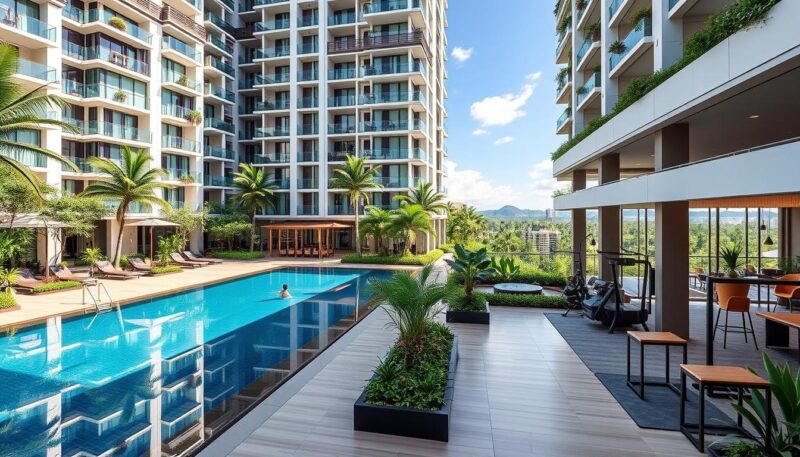
In Singapore, property developers are focusing more on shared facilities and amenities in new homes. For example, Parc Clematis has 400,000 square feet for common areas. Normanton Park has 60% of its 661,000 square feet for communal spaces and amenities. These facilities include dining, entertainment, playgrounds, and fitness centers.
Some buyers like the wide range of condo features in Singapore. Yet, others wish for more space for bigger homes. Developers aim to create a balanced mix of tenants in mixed-use projects. They design amenities to meet changing needs, offering a comfortable lifestyle within the community.
Design and Architectural Influences
Singapore’s property scene is changing fast. New homes are inspired by the country’s history and nature. For example, BTO projects in Sembawang North will have designs that honor the sea.
They will have courtyard layouts, pitched roofs, and geometric patterns. These are like those found in old colonial bungalows. The streets, play areas, and gardens will also have nautical themes. This will make the area feel connected to its maritime past.
In Woodlands North Coast, the hills offer great views of parks and the waterfront. Developers are using smart designs to make the most of the space. They’re using layouts like the “dumbbell” design to cut down on corridors and increase living space.
These designs show how architects and designers are blending architecture Singapore and residential design Singapore with design trends Singapore. They aim to create spaces that are both useful and beautiful.
Connectivity and Transport Links
Accessibility and connectivity are top priorities for new homes in Singapore. Woodlands North Coast residents will enjoy easy access to the Johor Bahru-Singapore Rapid Transit System Link. They will also have direct underground access to the Thomson-East Coast Line’s Woodlands North MRT station.
The government plans to make public transport better. They aim to have eight in 10 households near a public transport station by 2030. They will invest over S$60 billion (US$44.2 billion) to expand the MRT network to 360km by the early 2030s.
Before, being close to a bus stop was important. Now, access to multiple train lines is more valuable. The government is also improving walking and cycling paths.
By 2030, Singapore aims to be a “45-minute city” with “20-minute towns.” This will make public transport and MRT connectivity better than ever.
Singapore Property Trends and Changes
The Singapore property market has seen big changes over the last ten years. Factors like developer stamp duties and the rise of proptech have played a big role. Now, developers have to work faster and face higher costs.
These changes have made condo designs more standard. There’s less room for creativity. But, the way space is used has improved thanks to new rules.
Developers are now focusing on adding more facilities and amenities. This meets the changing needs of buyers. Yet, some buyers still want more space for bigger homes, not just shared areas.
The government plans to add more homes to the market. They aim to launch 100,000 BTO flats from 2021 to 2025. Also, 5,450 private homes will be released in the first half of 2024. This increase in supply will likely shape the market.
Despite the increase in housing supply, challenges remain. Construction costs are rising, and there’s worry about too many new homes. The government’s role in the market is also a concern. As the market changes, developers and buyers must stay informed to make smart choices.
Mixed-Use Developments and Tenant Mix
The Singaporean property market has changed how developers create mixed-use projects. Now, they focus on the tenant mix from the start. They aim to make a cohesive and appealing experience for residents.
Projects like Woodleigh Residences, Pasir Ris 8, and J’den have well-thought-out shopping and dining areas. Developers even promise specific tenants, like a supermarket, to attract buyers.
This emphasis on the right tenant mix aims to build vibrant, integrated communities. By choosing the right commercial tenants, developers provide a variety of amenities. This makes the project more livable.
This change shows how important it is to create community-focused mixed-use spaces in Singapore.

Mixed-use developments in Singapore are known for combining different functions in one project. They mix residential, commercial, and recreational spaces for a convenient life. These projects also focus on sustainability, with energy-efficient buildings and green transport options.
Space Efficiency and Layout Designs
In Singapore, the focus on making the most of space is growing. This is because of new rules and trends. Now, condos are designed to use space better, giving homeowners more room to live.
Old tricks like big air-con ledges and bay windows are no longer used. This means homes have more real space. But, some people might miss features like planters or bigger balconies.
New designs in Singapore are becoming popular. For example, the “dumbbell” layout connects bedrooms through a living room. This makes the most of every inch, pleasing today’s buyers.
Even so, some still like the old ways of living. They want clear spaces and more privacy. So, developers are trying to find a balance. They aim to please everyone with their designs.
Proximity to Multiple Train Lines
In Singapore, the focus has moved from just being near bus stops to being close to multiple train lines. Places like Woodlands North Coast are taking advantage of this, with links to the Johor Bahru-Singapore Rapid Transit System Link and the Thomson-East Coast Line. This means easier access to more jobs and travel across borders, making public transport better in Singapore.
The government is also working on better walking and cycling paths. This makes it easier to get around the city, connecting homes, transport hubs, and important places. With these improvements, living in Singapore becomes more convenient, thanks to the many train lines nearby.
The project to link the North-South Line (NSL) and Thomson-East Coast Line (TEL) in Orchard took eight years. Two years were for the initial design. The underpass section, 52m below Orchard Boulevard, took about 1½ years to build.
The 102m-long section under the Orchard NSL station took nearly five years. This was because of the careful cutting near active train operations. The Orchard TEL station opened in November 2022, marking a big step forward in Singapore’s MRT connectivity.
Newton Area Redevelopment Plans
Singapore’s urban planners are working hard to improve the Newton area. They aim to balance new homes with keeping the area’s history alive. The Urban Redevelopment Authority (URA) wants to add new housing and amenities while preserving the area’s charm.
About 29 hectares near the Newton MRT station are set for redevelopment. These sites hold important historical buildings from before Singapore’s independence. The URA must find a way to mix old and new, creating a lively and diverse neighborhood.
The Recreation Master Plan will launch in 2025. It will guide Singapore’s growth for the next 10 to 15 years. The plan includes adding up to 20,000 new homes, including the first Bukit Timah HDB flats in nearly four decades.
Recent projects like Cairnhill 16 and Klimt Cairnhill have seen high demand. This shows the area’s appeal. As major office buildings in Newton end their leases in 2025, the URA has a chance to shape the area’s future. They will focus on urban planning, residential development, and preserving heritage.
Demand and Pricing for Central Area Homes
The central Newton area has few new homes, making them highly sought after. Recent launches like Cairnhill 16, Klimt Cairnhill, and Kopar at Newton have seen strong demand. These properties are perfect for those wanting to live or invest in Singapore’s heart.
Pricing for these homes will depend on land costs, construction, and the area’s appeal. This might make them expensive for some buyers. But, the Urban Redevelopment Authority plans to offer more affordable housing in central areas like Newton.
The demand for homes in central Singapore will keep prices high. Buyers and investors need to think carefully about the costs and benefits. The competitive market in central Singapore requires careful planning.