
Singapore is a top choice for real estate investors. Its prime districts offer many chances for profit. This guide will cover what makes these areas attractive, the different property regions, and the rules for owning property. It will also talk about how to make smart choices when buying property.
By understanding the Singapore market, investors can make better decisions. This knowledge helps them take advantage of the city-state’s growth potential.
Key Takeaways
- Singapore’s prime districts, such as 9, 10, and 11 (Core Central Region), are known for their higher property values.
- Each district encompasses multiple neighborhoods or estates, each with its own unique characteristics and investment potential.
- Investors often consider district codes when evaluating capital appreciation prospects, as properties in prime areas tend to retain or increase in value due to their central locations.
- Proximity to work, family, education, amenities, and lifestyle are crucial factors when choosing a district for property investment in Singapore.
- Singapore’s property market provides long-term returns on equity that outperform other investment instruments, making it an attractive option for investors.
Understanding Singapore’s Property Regions
Singapore’s property market is split into three main areas: the Central Core Region (CCR), the Rest of Central Region (RCR), and the Outside Central Region (OCR). Each area has its own special features and investment chances for those looking to buy property in Singapore.
The CCR includes Singapore’s top spots, like districts 9, 10, and 11, plus the Downtown Core. Homes here cost more because of their prime locations and fancy amenities. It’s perfect for those wanting a luxurious life in the city’s heart.
The RCR covers central areas not in the CCR, like Chinatown, Queenstown, and Tiong Bahru. These places offer cheaper homes but still have easy access to the city’s lively scene.
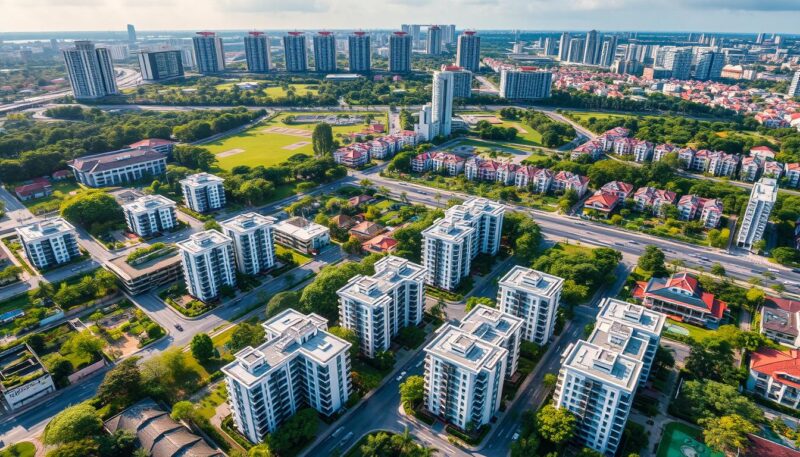
The OCR, which makes up most of Singapore, has more budget-friendly homes. Places like Clementi, Tampines, and Jurong are in the OCR. They offer a suburban vibe with lots of amenities and easy city center access.
Knowing the differences between these property regions is key for investors and homebuyers. By looking into the CCR, RCR, and OCR’s unique traits and investment possibilities, they can make choices that fit their needs and budget.
Prime Residential Neighborhoods in Singapore
Singapore’s top residential areas are in the Central Core Region (CCR) and Rest of Central Region (RCR). Places like Orchard, River Valley, Tanglin, Bukit Timah, and Holland are famous for their high-end homes. These areas attract investors with their prestige, close distance to the city center, and top-notch amenities.
Shophouses in these areas cost about S$5,338 per square foot. The demand for these properties has gone up, with sales rising by 44% to S$415 million. Experts predict sales will hit S$1.5 billion in 2023. Neighborhoods like Ann Siang Hill, Balestier, Bugis, and Boat Quay mix history with modern living, appealing to many.
Understanding each neighborhood’s unique traits is key for successful investments in Singapore. From Chinatown’s charming shophouses to Cairnhill’s serene beauty, each area has its own charm. This makes Singapore a great place for investors looking for luxury homes.
Singapore Property Taxes and Ownership Rules
Investing in Singapore property means knowing about taxes and rules, especially for foreigners. The Additional Buyer’s Stamp Duty (ABSD) charges more for foreign buyers. Foreign owners also pay higher annual property taxes than locals.
Buying landed properties in Singapore as a foreigner is more complicated. You need government approval and a big investment. Understanding these rules is key to making your investment work well.
Property taxes in Singapore depend on the property’s value. For homes, taxes range from 0% to 32%. For non-owner-occupied homes, taxes are 12% to 36% of the value.
Commercial and industrial properties are taxed at 10% of their value. Vacant homes are taxed like non-owner-occupied homes. Vacant commercial properties are taxed at 10% of their value.
Foreign investors need to know the ABSD, property taxes, and rules to succeed in Singapore. By understanding these, investors can make smart choices and get the most from their investments.
Factors Drawing Investors to Singapore Property
Singapore’s strong economy and stable politics make it a top choice for real estate investors. Its limited land and high demand for properties ensure long-term value. The city’s role as a global financial hub and business-friendly policies add to its appeal.
The country’s rule of law, English language, and regulated finance attract international investors. Singapore’s property market outlook is bright, with its economic stability and real estate investment opportunities drawing global interest.

In the first quarter of 2023, 6.9% of property purchases were made by foreign buyers. This is up from 3.1% in the same period last year. The ABSD increase to 60% for foreign buyers has raised concerns. Yet, Singapore’s reputation as a safe haven continues to attract the ultra-rich.
Strategic Location for Real Estate Investment
Singapore’s spot on the Strait of Malacca, a key shipping route, boosts its appeal for real estate. Its central location in Southeast Asia and top-notch transport system add to its Singapore’s Connectivity. This draws businesses and professionals, increasing demand for homes and offices.
The Singapore’s Infrastructure gets a boost from the government’s plans for new business districts. Places like Woodlands Regional Centre and Jurong’s second CBD are being developed. These plans highlight Singapore’s Geographical Advantages and Singapore’s Strategic Location, making the property market even more promising.
Singapore’s real estate market has always been strong, with property values rising over time. The steady need for rental homes, thanks to a growing population and more expats and foreign workers, attracts investors. Both locals and those from abroad see the value in investing here.
Singapore Property
Singapore’s real estate offers many investment chances. You can find everything from homes to commercial spaces. Each type has its own growth potential and features.
For homes, you can look at luxury condos, landed houses, or more affordable options. These choices fit different budgets and lifestyles. They help investors meet their goals.
Commercial properties include offices, retail spots, and industrial sites. These options are great for those wanting to spread their investments. They tap into Singapore’s commercial growth.
It’s key to know the details of each sector for a good investment plan. By studying market trends and growth, investors can make smart choices. This way, they can succeed in the Singapore property market.
Hiring Professional Support Team
Understanding the Singapore property market well needs a trusted team of experts. A skilled Singapore Real Estate Agent is key. They know the local market and find the best places to invest.
It’s also smart to talk to a seasoned Singapore Property Lawyer. They handle the legal stuff, like checking everything out and setting up ownership. A Singapore Financial Advisor can help with money matters, like loans, taxes, and how to invest wisely.
Having a team of Singapore Real Estate Professionals is a smart move. They use their knowledge to guide you and improve your investment success. This way, you can tackle the market’s challenges and aim for the best returns.
Structuring Your Singapore Property Purchase
Investing in Singapore property requires a team of experts. They help structure the purchase for the best results. This includes choosing the right ownership structure, like individual or corporate, to save on taxes.
The process of buying a property in Singapore is detailed. It involves finding the right property and meeting legal requirements. Your team can guide you to make smart investment choices.
One important tax to consider is the Additional Buyer’s Stamp Duty (ABSD). It applies to second property buyers. You can reduce this tax by structuring ownership wisely, like decoupling or using a child’s name.
It’s also crucial to understand the Seller’s Stamp Duty (SSD) and Buyer’s Stamp Duty (BSD). Knowing these can help you make better investment decisions.
With the help of your legal, tax, and financial advisors, you can tackle the Singapore property market. They ensure your purchase is strategic, aiming to increase your investment while reducing risks and taxes. This approach can significantly impact your real estate journey.
Financing Options for Property Investment
Getting the right financing is key in property investment in Singapore. The city offers many financing options for investors. These include Singapore Property Financing, Mortgage Loans, and more.
Banks are a popular choice for financing. They offer loans up to 30 years for HDB flats and 35 years for other properties. The Loan-to-Value (LTV) ratio is 75% for private homes, requiring a 5% downpayment. For HDB loans, the LTV is 80%.
The Total Debt Servicing Ratio (TDSR) is also important. It limits monthly debt to 55% of income. This affects how much you can borrow for private properties. The Mortgage Servicing Ratio (MSR) also has rules, capping borrowing at 30% of income for HDB flats and condos.
The government helps with housing grants. These include the CPF Housing Grant and others. They help lower the cost of buying a home for first-time buyers, based on income and eligibility.
Exploring financing options in Singapore requires working with financial advisors. They help understand costs, requirements, and the best option for your goals. By carefully looking at financing, investors can make smart purchases that boost returns and reduce risks.
Choosing Between Apartments and Landed Properties
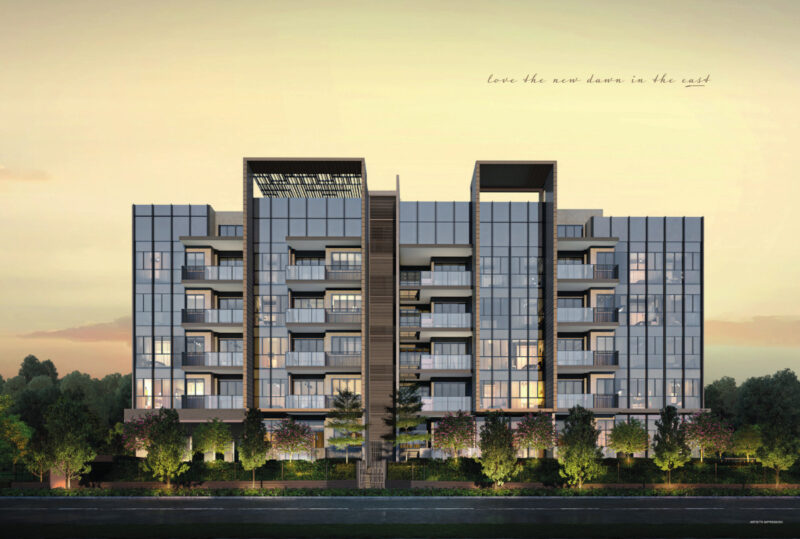
Investors in Singapore must think about the pros and cons of apartments and landed properties. Apartments, like condos, are often cheaper and can have higher rental returns, especially outside the city center. Landed properties, however, are more prestigious and might appreciate more over time. But, they cost more upfront and have stricter rules for foreign buyers.
The landed property market in Singapore has grown a lot lately. Terrace houses saw a huge jump in sales, with prices per square foot going from $475 in 2003 to $1,784 in 2023. Semi-detached houses and bungalows also saw big increases, with Good Class Bungalows seeing the biggest rise of all.
Understanding the market and your goals is key to picking the right property. Whether it’s apartments or landed properties, do your homework. Get advice from experts and choose wisely based on your investment strategy and risk level.

Property Buying Process and Due Diligence
Buying property in Singapore is a detailed process that needs careful attention. It’s important to work with a skilled real estate agent and a trusted legal team. The steps include evaluating the property, negotiating the contract, checking the title and legal aspects, arranging financing, and closing the deal.
It’s vital to do a deep dive into the property’s background, its ownership history, and any possible problems. This helps avoid risks and makes sure the investment is sound. The due diligence in Singapore can take a few weeks to a couple of months. This depends on how complex the property is and how easy it is to get the information.
Following the right steps and getting expert advice helps investors buy Singapore property with confidence. But, rushing through due diligence can be costly. It might lead to extra expenses for legal advice, property inspections, and other fees. Knowing the Singapore Property Buying Process and doing thorough due diligence is key for a successful real estate deal in Singapore.