
In 2024, Urban Revitalization is all about fighting climate change and making cities sustainable. Places like Almere, Bilbao, New York, São Paulo, and Venice are leading with zero-carbon projects. The C40 Reinventing Cities competition helps highlight their efforts.
These places are mixing work, living spaces, and green areas together. They use green rooftops and create eco-friendly community spots. This changes how cities look and feel.
The World Economic Forum wants cities to be greener and cheaper to live in. As more people move to cities, Urban Revitalization’s goal is to support this growth in a green way. It aims to improve both the community and the look of neighborhoods.
Characteristics of Successful Urban Revitalization Projects
Successful Urban Revitalization depends on sustainability, community engagement, and economic growth. It starts with strategic land use to make the most of every space. This leads to job growth and better property values nearby.
At the heart of these projects is Sustainable Development. It includes green designs and energy savings in older buildings. This approach fights climate change and makes cities greener. Historic Preservation is also vital. It ensures new growth respects our cultural past. By mixing old and new, we get a blend of history and innovation.

Inclusive housing and planning strengthen communities. They aim to meet local needs and create a welcoming space for all. With the rise of gentrification, steps are taken to keep areas affordable and culturally rich.
Urban landscapes are changing fast. But the real success of revitalization lies in long-term benefits and strong community values. These efforts do more than just improve the environment. They leave a lasting positive mark on the lives of the community members.
Urban Revitalization: Transforming Cities Around the Globe
Urban Revitalization efforts are tackling problems caused by growing city populations. This is happening in places like Asia and Africa. These initiatives aim to make cities more resilient and efficient. They also want to improve economic stability and promote healthy living.
UrbanShift, backed by the Global Environment Facility (GEF), plays a big role in this effort. It provides a way for cities to work together on development. The focus is on Mixed-Use Development. This makes land use more efficient and meets the needs of different people.
Using Green Energy and nature-based methods are key to these projects. Such approaches boost ecological sustainability and city efficiency. For example, adopting low-carbon transport and protecting natural areas are important steps.
These Revitalization efforts also focus on Climate Resilience. Cities are using smarter land use and restoring ecosystems. This helps them face environmental problems better. These efforts show a global commitment to creating fair, equitable, and lasting urban areas.
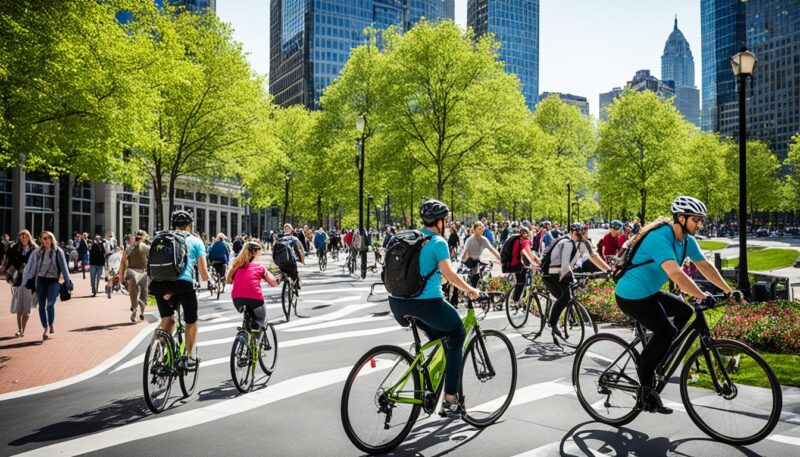
The Role of Public-Private Partnerships in City Rejuvenation
Public-Private Partnerships (PPPs) have become crucial in urban renewal. They bring together public support and private expertise. This teamwork is key in drawing investment, spurring economic growth, and promoting sustainable community advancement. PPPs turn old or unused areas into lively spots for living, business, and culture.
These efforts help make sure renewed areas benefit everyone. They foster a feeling of belonging and collective progress.
PPPs also push forward innovation and funding in important sectors, like green energy and eco-friendly projects. They focus on sustainable growth, helping to lessen environmental harm. This approach supports the world’s climate goals and sustainability.
These partnerships improve the look and feel of our cities. They also boost the quality of life by creating jobs and economic chances.
PPPs make our cities better suited to meet the changing needs of their people. They are central to sustainable development, allowing cities to prosper without hurting the planet. By mixing public governance with private sector efficiency, PPPs create strong urban areas ready for tomorrow’s challenges.
Their work ensures cities continue to grow in a balanced, vibrant way. Thus, PPPs are key players in transforming our urban landscapes into thriving habitats.