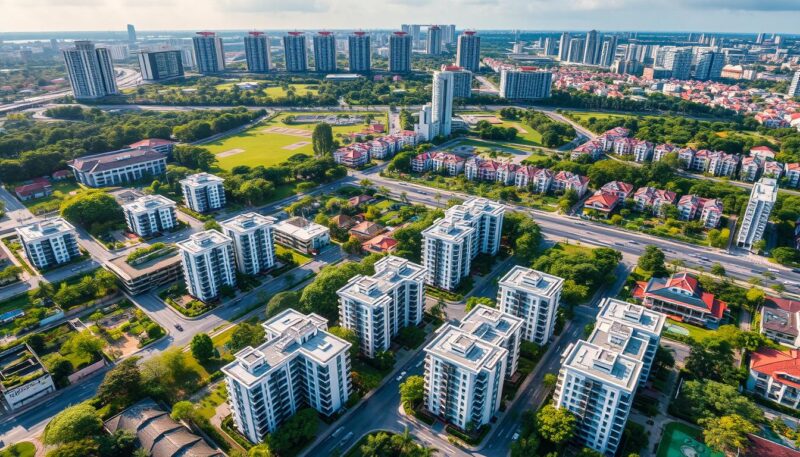
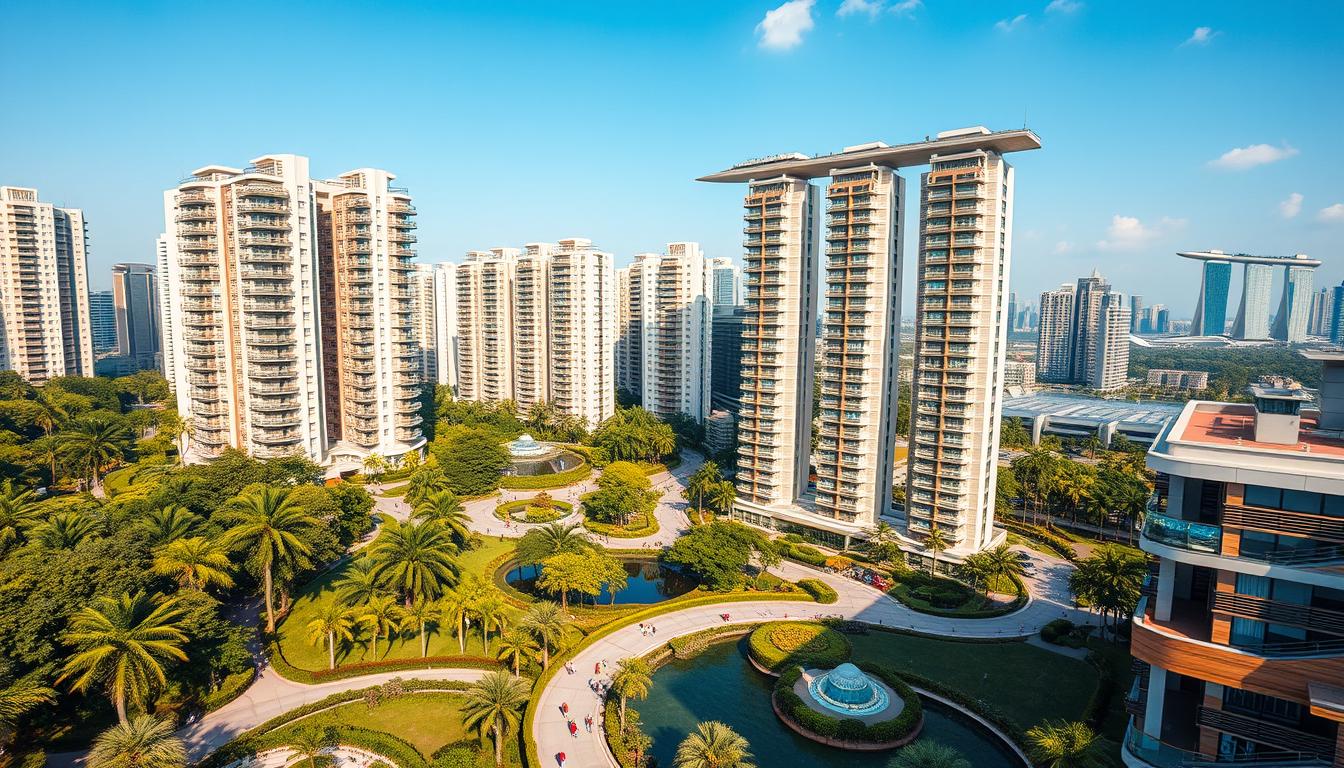
The Singapore property market has seen a unique trend called “en bloc” sales. This term means selling an entire building as one unit. It’s become common in Singapore because of the limited land.
En bloc sales let developers tear down old buildings and build new, bigger ones. This can make them a lot of money. To make it happen, at least 80% of owners in older buildings, or 90% in newer ones, must agree. This is because of the Land Titles (Strata) Act.
Despite the hurdles, homeowners can get a 40% premium over what they could sell their homes for individually. This makes en bloc sales very appealing.
But, new rules have made developers think twice about en bloc sales. These rules, like higher Additional Buyer’s Stamp Duty (ABSD) rates, add costs. This has made the market more cautious, possibly changing how often and successfully these sales happen.
Key Takeaways
- En bloc sales are the collective sale of an entire residential development in Singapore.
- Developers are interested in en bloc sales as they can demolish existing buildings and construct larger, higher-density developments.
- Homeowners can receive a premium of at least 40% compared to individual resale prices in en bloc sales.
- The process requires a consensus of at least 80% of owners for properties older than 10 years, or 90% for those less than 10 years old.
- Cooling measures, such as increased ABSD rates, have slowed down developers’ interest in en bloc sales.
What is En-Bloc in the Context of Singapore Property?
In Singapore, “en-bloc” means selling an entire building together. Owners of units agree to sell to a developer or the government. This way, the land can be used more efficiently, especially in a small country like Singapore.
The idea of en-bloc sales has changed a lot over time. Before 1999, one owner could block the sale. But the Strata Titles (Amendment) Act of 1999 changed this. Now, 80% of owners must agree by share value and area to sell (90% for newer buildings).
En-bloc sales help developers get land to build new projects. Around 2004, developers started seeing value in leasehold plots. Now, they use more detailed agreements for sales, like ⅓ share value and ⅓ strata area.
The en-bloc process in Singapore has become simpler and fairer. From 2017 to 2024, the total sales reached S$28 billion. This shows how crucial en-bloc sales are in the Singapore property market.
The Need for En-Bloc Sales in Land-Scarce Singapore
Singapore is one of the smallest countries in the world. It faces a big challenge because of land scarcity. To make the most of every plot, the city often goes for urban renewal and redevelopment.
En-bloc sales are key in this effort. They allow older, less efficient buildings to be torn down. Then, they are rebuilt into denser projects that make more money for developers.
In 2021, en-bloc sales really took off, and this trend continued into 2022. There were 12 successful sales worth $3.5 billion. This shows how important en-bloc sales are in Singapore’s property scene.
En-bloc sales help use land efficiently. As new developments and projects pop up, this is crucial in land-scarce Singapore.
But, the en-bloc process is complex. There are strict rules, like needing 80-90% owner consent. There can also be objections from some owners. Yet, the benefits are clear. Residents get big financial gains and the chance to move into better homes.
En-Bloc vs. Resale: Key Differences
In Singapore, homeowners can sell their properties in two ways: en bloc sales and resales. En bloc sales happen when most owners agree to sell the whole building. This is different from resales, where each homeowner sells their property separately.
En bloc sales take longer, often up to 2 years. But, they can give homeowners much higher profits than resales.
The main difference is in the selling process. En bloc sales need a big majority of owners to agree. Resales, on the other hand, are quicker and easier for each homeowner. This makes en bloc sales more profitable for homeowners.
Profitability of En-Bloc Sales for Homeowners
The idea of making a lot of money is a big reason for the en bloc trend in Singapore. Developers pay a lot to buy these sites. They can then tear down old buildings and build new, more profitable ones.
Developers offer high prices to get owners to sell. These prices are often 40% or more above what the property is worth. This big incentive is what drives the en bloc craze.
Even though only 1 in 10 en bloc sales succeed, the rewards are worth it. Owners get 95% of the money right away. The rest comes after they move out in 3-6 months. This can be a big financial boost, especially for those who have owned their property for at least 3 years.
En bloc sales have helped Singapore’s economy and housing. But, the government’s rules have slowed things down. Developers are now more careful about buying land, waiting for a clearer market.
Challenges and Objections in En-Bloc Sales
En-bloc sales in Singapore offer homeowners a chance to make money. But, they come with their own set of challenges and objections. Getting 80% of owners to agree is a big hurdle. Yet, up to 20% can still object and appeal, as seen in the Chuan Park case.
Concerns like lack of transparency and disagreements over money are common. Issues with getting consent from owners add to the complexity. The age of the development, how shares are valued, and when meetings are held can also cause disputes.
The whole process can take up to 38.5 months. Legal challenges can make it even longer. Owners who leave early get 100% of the money. Those who stay for six months get 95% at completion and 5% later.
These issues show the need for a fair approach in en-bloc sales in Singapore. It’s important to balance the interests of homeowners, developers, and the community. As en-bloc sales shape the Singapore property scene, addressing these concerns is key for a smooth process.
Impact of Cooling Measures on Singapore Property En-Bloc Market
The Singapore government has made big changes to the en bloc sales market. They’ve raised the Additional Buyer’s Stamp Duty (ABSD) rates a lot. Now, developers have to pay 40% ABSD on en bloc deals, which makes them less eager to buy.
Over time, the ABSD rates have gone up, making things harder for en bloc deals. The latest cooling measures, introduced in December 2022, are seen as even tougher. These new rules, announced just 25 minutes before they started, are expected to slow down home sales.
The en bloc market is very sensitive to these changes. Developers will have to think about the extra taxes and how they affect demand. This might lead to lower land prices, making en bloc deals less appealing. Also, the 30% ABSD for foreign buyers could reduce foreign investment, hitting the en bloc market hard.
Despite these hurdles, the government is working to increase housing supply. They’re launching more Build-to-Order flats and offering more Government Land Sales (GLS) sites. But, it will take time for these efforts to show results, as they involve a lot of steps.
The future of the en bloc market in Singapore is uncertain. Analysts say it will be tough due to economic worries, higher borrowing costs, and global tensions. Developers might look at commercial sites more, and homeowners might not want to join en bloc deals because of the costs and wait. As the market changes, it’s key for everyone to watch the rules and adjust their plans.
En-Bloc vs. SERS (Selective En-bloc Redevelopment Scheme)
En-Bloc sales are for private homes, while SERS is for public housing (HDB) flats. The main difference is that SERS is started by the government. Residents have little say in it. En-Bloc sales need at least 80% of owners to agree.
SERS was launched in 1995 to update old public housing estates. Only about 5% of HDB flats qualify. It offers a good deal to homeowners, including money based on market value, new units, and grants.
HDB En-Bloc sales let residents choose their new homes more freely. The new Voluntary Early Redevelopment Scheme (VERS) gives more HDB homeowners a chance to benefit. This is unlike SERS, which is selective.
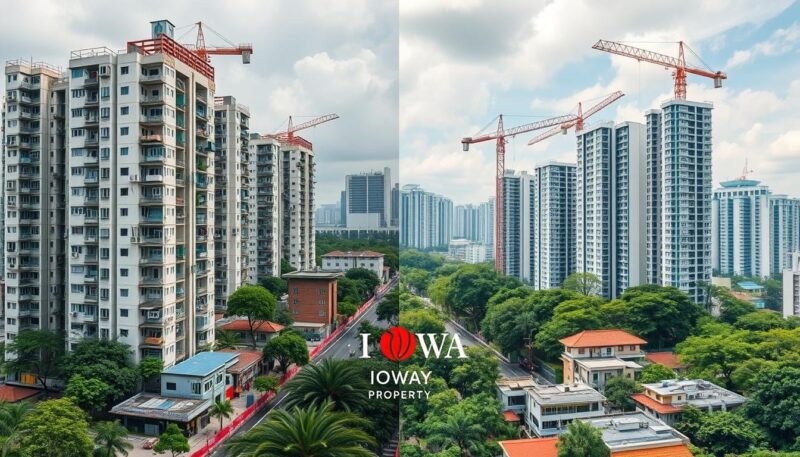
While SERS makes moving easier, VERS homeowners might get less money. VERS redevelopment will take 20 to 30 years. SERS is usually done in 4 to 5 years.
Identifying En-Bloc Potential in Singapore Property
In Singapore, where land is scarce, property owners are eager to sell their properties en-bloc. This means selling the property as part of a group sale. It can lead to a big profit over the usual market price.
Several things can show if a property has en-bloc potential. These include rising land values nearby, older buildings that use land less efficiently, and the property’s age. Older buildings need less agreement from owners to sell en-bloc.
But, selling a property en-bloc is rare. It’s because the rules are strict. Industry data shows that en-bloc properties in Singapore are usually 20-45 years old. Younger people might be more willing to move for a good profit. Also, corporate owners can make it harder to get approval for a collective sale.
The government’s recent rules have made things harder for the en-bloc property market in Singapore. But, it still offers chances for profit. So, figuring out if a property can be sold en-bloc is key for owners and developers in this fast-changing market.
Recent Successful En-Bloc Sales in 2022-2023
The en bloc market in Singapore has seen a big boost since the Covid-19 pandemic. In 2022, there were four collective sales, compared to just four in 2020. Despite the pandemic and cooling measures, developers are now buying back land through En Bloc Sales Singapore 2022 and 2023.
One big success was Fairhaven, a 101-unit condo in Bukit Timah. It was sold for S$289 million. Owners will get between S$2.6 million and S$3.8 million each. Another success was Sophia Ville, a 78-unit condo in District 9, sold for S$333 million.
These sales show the en bloc market is still key in Singapore’s property scene. Developers are looking to buy more land to meet the demand for new homes.
Environmental Concerns and Sustainability Challenges
The En Bloc Environmental Impact Singapore is changing the city’s look. But, it raises big questions about being green. Demolishing and building new is bad for the planet, especially since buildings are a big part of Singapore’s pollution.
Buildings in Singapore don’t last long because of money, not because they’re old. This makes the problem worse. A better way is to think about the carbon in old buildings before tearing them down. This could help Singapore meet its green goals.
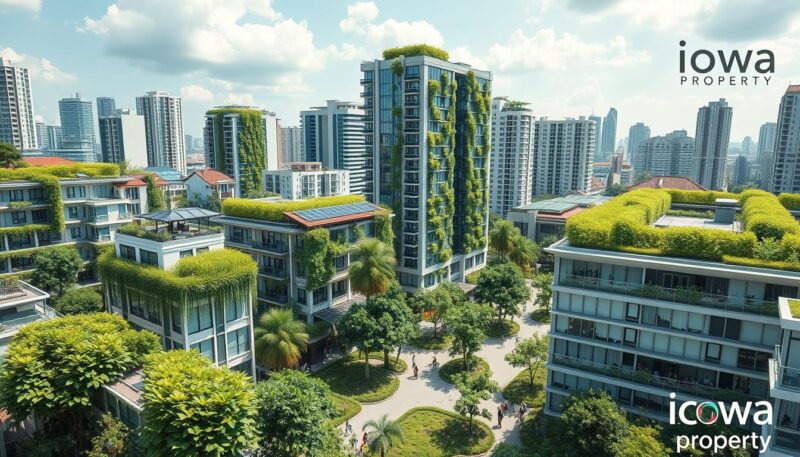
Singapore is working hard to protect the environment. It’s using smart water systems and aims to grow 30% of its food locally by 2030. The debate on En Bloc Environmental Impact Singapore shows the need for a balance between growth and green living.
Cultural and Social Impacts of En-Bloc Sales
The en-bloc phenomenon in Singapore has big cultural and social effects. The city’s constant change erodes cultural identity and community memories tied to iconic buildings. En-bloc sales also disrupt neighborhoods and displace communities, especially older residents who have strong ties to their homes.
Madam Chow’s story shows the emotional impact of losing a family home to an en-bloc sale. Her story and others like it show the social costs of en-bloc sales. They can uproot people and break close-knit communities.
Parliamentary discussions have raised concerns about en-bloc sales’ effects on vulnerable groups, like elderly widows. They face big challenges in finding new homes that meet their needs and budgets. The idea of homeownership is being questioned in how it affects personal control over living spaces in en-bloc sales.
En-bloc sales are practical in Singapore’s land-scarce environment. But, the cultural and social costs of changing neighborhoods and displacing communities are real. Policymakers and developers must find a balance between urban renewal and preserving cultural heritage and resident well-being.
Potential Reforms to En-Bloc Laws and Regulations
The debate on en bloc sales in Singapore is ongoing. Experts suggest reforms to balance benefits and drawbacks. A total ban might be too harsh, but changes are needed.
One idea is to make buildings older before they can be sold. For example, buildings might need to be 20 or 30 years old. This could protect older neighborhoods and keep long-term residents in place.
Another proposal is to increase land supply through government sales. This could reduce the need for en bloc sales. More development sites might ease worries of homeowners who value their community’s character. Finding the right balance is a big challenge for policymakers.